When I Kip, You Kip, We Kip
What to know about gymnastics’ “most unremarkable” skill

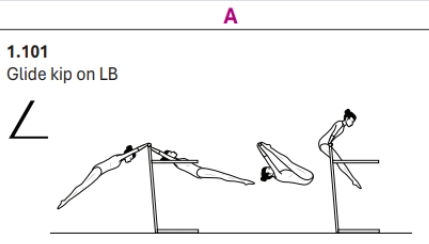
If you’re ever curious about what a gymnastics skill is called or how it works, your first stop should be the Balance Beam Situation and its author Spencer’s Clickable Code of Points. Here’s what he has to say about the glide kip:
The normal one, the boring one, the one that everyone does. In modern elite gymnastics, the glide kip [is] the mount. Every single person does it, and it’s just there, and then you get to kip and start the actual part of the routine that people are paying attention to and care about. It’s the most unremarkable thing.
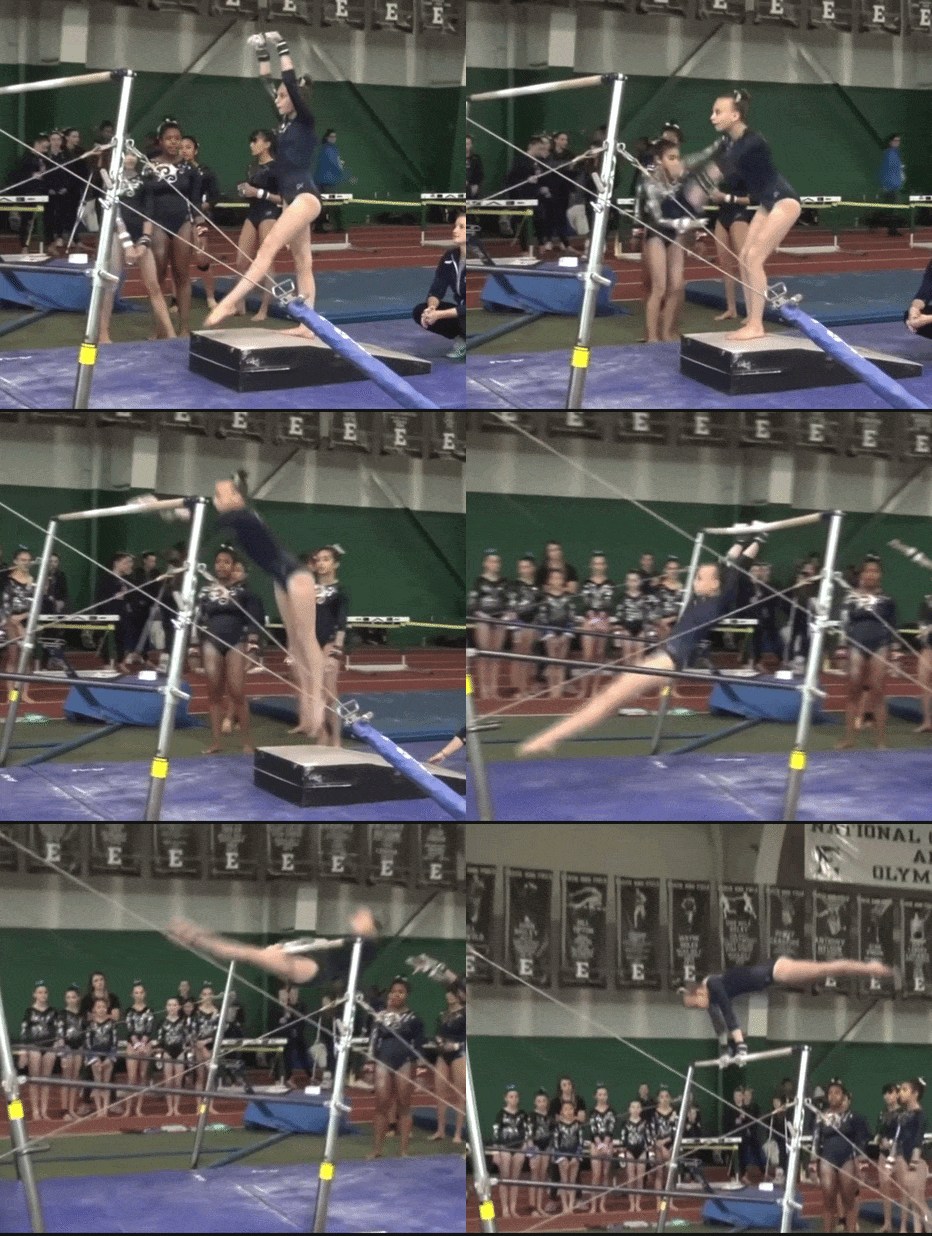
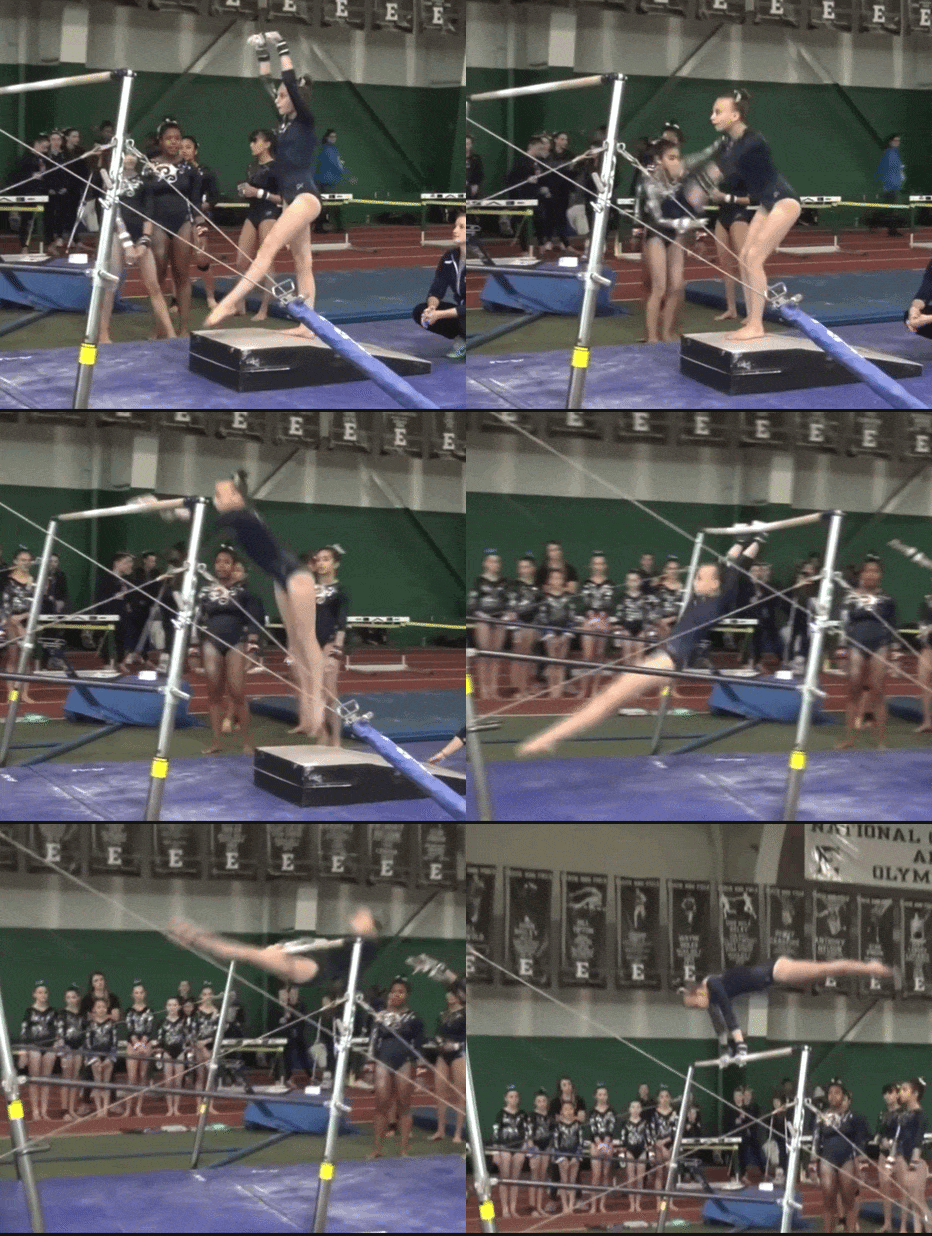
Your standard kip → cast combination.
For longtime gym fans and gymnasts in their prime, kips are unremarkable. In fact, the most remarkable thing about kips is actually when they’re missing from a bar routine. So why do you need to know about them?
Just because they’re unremarkable doesn’t mean they’re not vital. I mean, you have to get on the bar, right? Every single bar routine on Day Two of the 2026 Xfinity US Championships started with a kip — some straddled, some piked, some on the high bar — but as the man said, “the kip is the mount.”
And until the U.S. gets a little more creative with their bar routine construction (waiting on you, Suni!), kips are likely to stay dominant. So let’s break them down. That way, when you’re watching at home, you can shrug them off like the rest of the experts do.
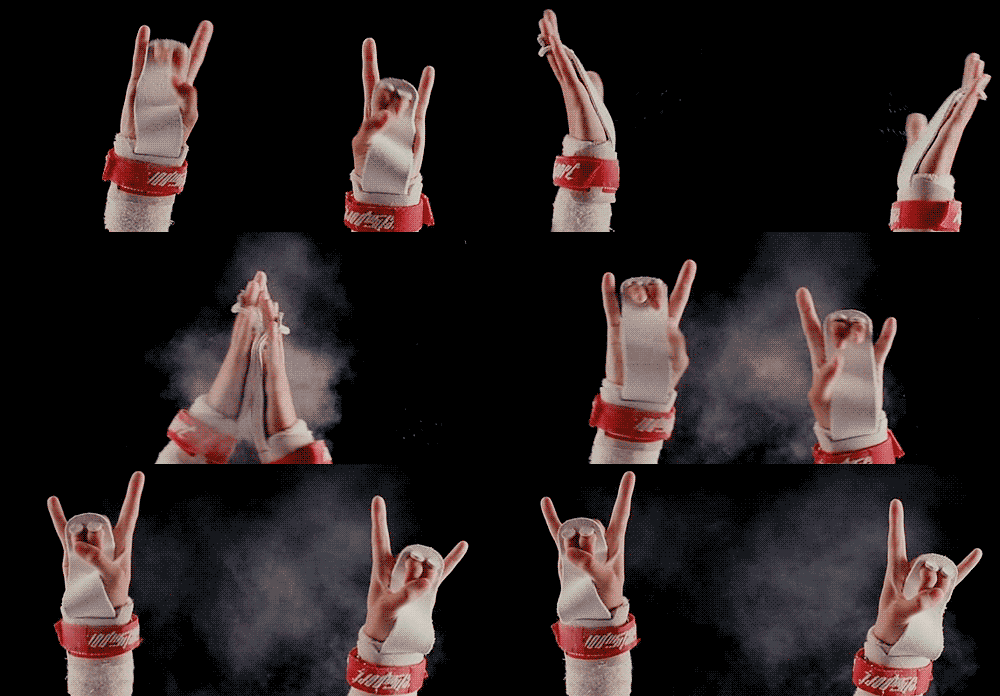
Muscles + physics + patience
Gymnasts on tv make kips look easy, but they are hard as hell. Kips require a ton of arm and core strength — and muscles you don’t necessarily use to an extreme degree in your daily life. Take it from an adult gymnast: if you haven’t done a kip in years and then decide (like a smart person) to just bust a move and try one, your armpit muscles and lower abs are going to hurt like hell for a week. Secretly, kips also require hip strength and active flexibility. That’s one reason people might choose to do the straddled version: the mechanics of a straddle kip can make it easier for athletes who lack hip flexor strength to snap their feet towards the bar.
The most essential part of kipping is learning the timing, though. That’s usually what takes kids the longest to master. If you jump into or at the bar directly instead of jumping up to catch the bar, you’ll kill your swing. If you don’t extend your hips and shoulders at the end of the swing, you won’t get the full momentum you need to help you pull yourself up. If you bring your toes to the bar too late, you’ll stop in a dead hang or fly off the back of the bar. If you snap your toes to the bar and then immediately let them drop away, you won’t get the height you need. Or maybe you’ll slam your chest into the bar (fun). If you don’t shift your wrists to the top of the bar and change your pulling motion into a pushing motion, you’ll get all the way up to the top — and then just drop off backwards.
And that’s just the timing of a low bar kip — a kip on the high bar has different mechanics entirely.
Your relationship to the equipment also matters. If you watch this video of Reese Esponda doing her kip at .55 speed, you can see the bar bend slightly and straighten back out as she swings forward (the ‘glide’). She snaps her toes to the bar, and pulls down to get her hips up on top (into ‘front support’), bending the bar again. The bar doesn’t have a huge range of motion from this angle, but I can guarantee that Reese is swinging forward with tension, bending the bar until she feels the moment just before it starts to straighten out — then she’s using that snap back to pull her toes to the bar and kip up.
A quick history side bar (…haha)
Kips are actually older than uneven bars themselves and I need more people to know that.
Women’s bars used to just be men’s parallel bars — they were side by side and, like the men’s are still today, oval-shaped. The first appearance of uneven bars in the Olympics was in 1952. And since they were just modified parallel bars (with one higher than the other by about a meter), they were also reeeeally close together. You couldn’t swing all that much between them and some of the skills looked like they’d be more comfortably done on a balance beam.
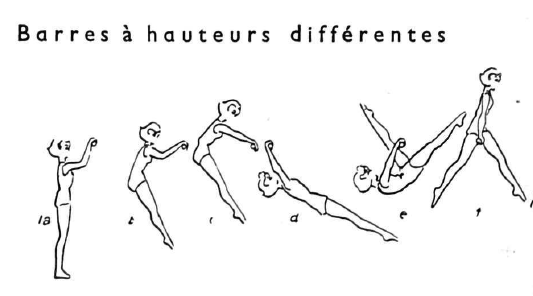
Back then, gymnasts competed in a ‘compulsory’ series of events (where all the routines were the same) and an optional series of events (where everyone had their own unique routines). On bars, the compulsory routine had a kip — but it was a one-legged “stoop” version:
Here’s a 1952 optional bar routine with a more recognizable kip:
Don’t let the move toward modernization fool you. Although this has some resemblance to contemporary gymnastics, there was no code of points that governed any of this in ‘52. Judges were trained in a two-day session right before the competition so that internationals could all be on the same page. There was a slight scandal because some countries interpreted the compulsory routine differently than the authors intended — no one was quite sure how to score that. The main rule was that women on bars weren’t allowed to show “unfeminine strength.”1
In the 1960s and 70s, the uneven bars got a new round shape and gradually moved further and further apart, allowing for bigger swings. In the late 1980s, you could set the bars pretty far apart and jump or flip from one bar to the other. Compulsory routines of that time still required gymnasts to be able to touch both the high and low bars at once:
Well. You know it’s me ‘cause it’s the 80s and there’s a banana yellow leotard involved.
Kips in development (Levels 1 - 10)
Kips aren’t immediately required for Developmental athletes these days. The Level 3 mount, for example, is simply a nice, hollow-body glide forward and backward. Then you pull your chin and hips to the bar from standing to get on top.
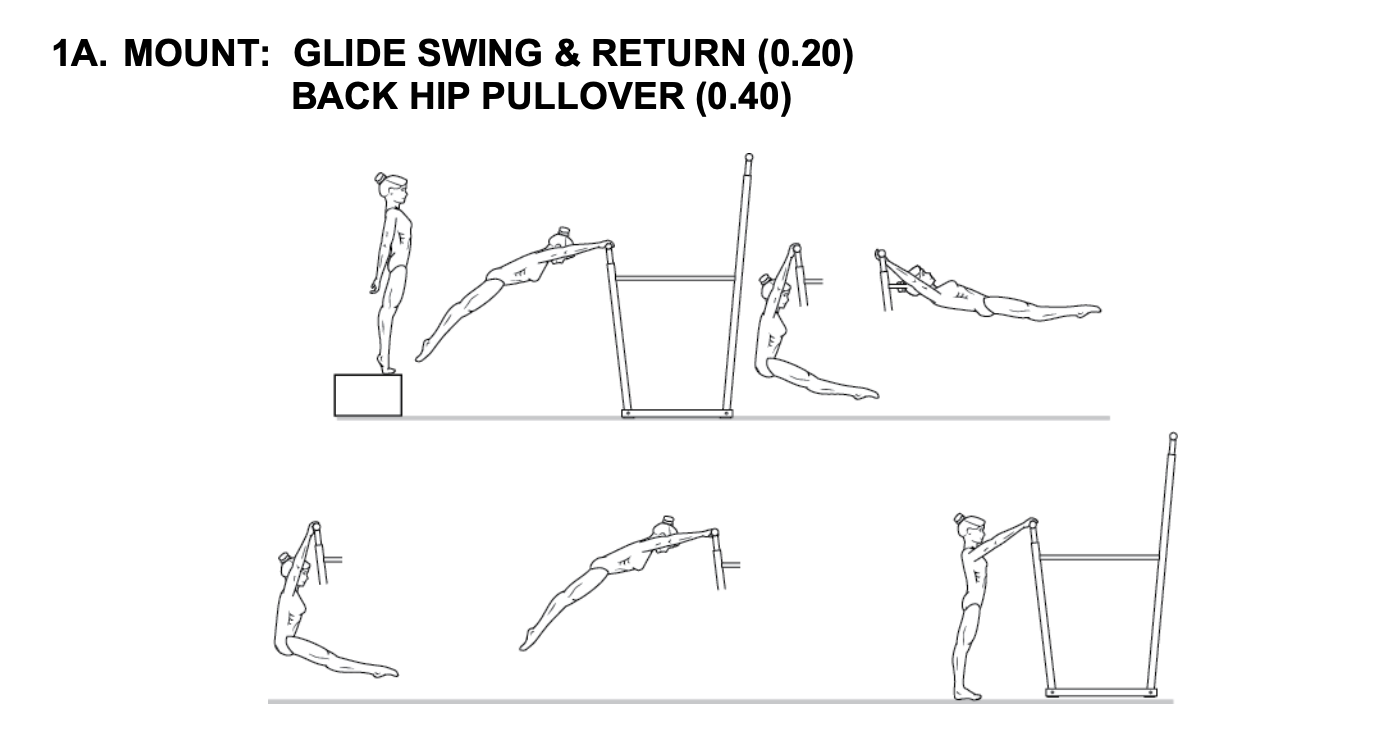
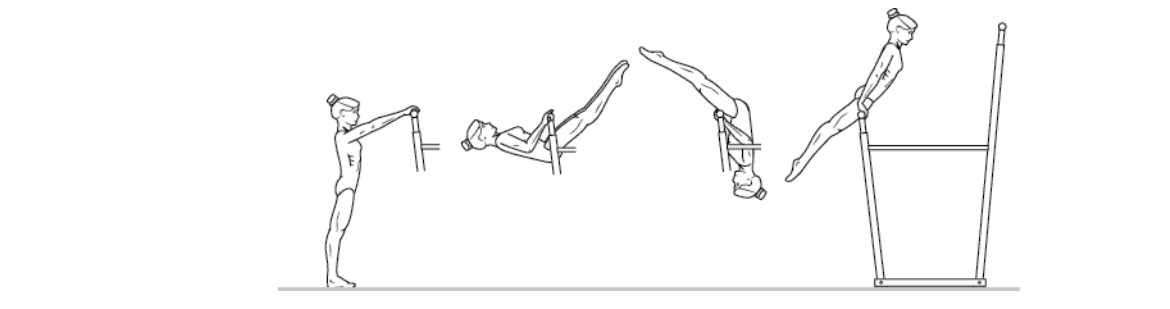
But in Level 4, they hit you with TWO kips in your routine — one on the low bar and one on the high bar.
For the low bar kip, if your hips don’t extend fully in your glide, the judges can take off up to .20 from your score. But don’t overextend those hips! ‘Cause if you tap or brush your feet on the mat, you’ll lose a few tenths of a point. If you can’t finish your kip with straight elbows, you’ll incur a deduction anywhere from .05 - .30, depending on how bendy we’re talkin’. The height angle of the swing (‘cast’) that you do out of your kip and into your next skill starts to matter, too. If there’s a pause between your kip and your cast, you’ll lose a flat .30. And it’s gymnastics, so…you best straighten your knees and point your feet!
By the time you’re a Level 5 or 6, it’s expected that you can kip and cast to a handstand. In order to make that happen, the kip has to finish with the shoulders and legs in front of the bar to get the maximum swing upwards and push downwards.
Gymnasts spend months (sometimes years!) trying to perfect their kips. It doesn’t come easy and the work happens when they’re pretty young. This is the skill that holds younger kids back for a season — or makes them quit. Kips are also exhausting as hell, so it’s common for little guys to make one or two and then just fall apart.
College
This is a tricky section to write without getting too into the weeds or just whining relentlessly, but…you’ll see a lot of kips in college gym bar routines. The reason that’s slightly annoying is because the presence of kips and kip cast handstands means that a lot of bar routines end up just looking like the same routine over and over. And over. And over again.
We can chalk that up2 to two related things: the fact that college routines are based on skills that rule-makers think that a Level 10 should be capable of performing and the fact that there’s no reward for risk or extra difficulty3.
The takeaway is this: in college gym, you’re more likely to see a series of difficult skills connected by kip-cast-handstands than you are to see a series of difficult skills connected to one another. Since kips alone are unremarkable at this point in someone’s career, you’ll hear commentators remark on the handstand instead, noting that “judges are looking for that handstand to be within 10 degrees of vertical.” They’re not wrong. Just remember that the handstand doesn’t often exist without the kip and that extended glides and straight arms in all these kips are technically still required (even if the judges aren’t going to take those deductions because…well, that’s someone else’s gripe).4
Elite
When you’re watching contemporary elite gymnastics, especially international competitions or the upcoming Olympics, you should pay attention to the absence of kips. The best bar routines just…won’t have them, except to maybe get on the bars. There are much more interesting and difficult ways to transition from skill to skill.
But don’t blink — you might mistake a toe-on for a kip — especially during Kaylia Nemour’s bar routines. Nemour competes for Algeria and is the absolute best ‘bar worker’ in the entire world. Here’s her bar routine from the 2025 World Championships:
That’s only two kips, baby. Which are completely obliterated from memory by the fact that she just flows from insanely difficult skill into insanely difficult skill. Check it out: a kip is worth an A. Unremarkable. A toe-on is worth a C. When you connect the C-value toe-on to something else (like the shaposh that Nemour did to get from the low bar to the high bar in the video above), its value increases. This practically kip-less routine got Nemour the gold — with a score that was OVER POINT larger than second place.5
Alternatives to kippin’
So if kips are fundamental to bars development, but the best of the best leave them behind as much as possible, what mounts should replace them? Luckily for everyone, a variety of dope-ass kips and kip replacements have existed FOREVER.
First, let’s take a look at kip mount variations — because the basic glide kip on the low bar isn’t the only game in town:
You’ve got your fully stooped kip where you pull your feet through your arms under the bar and onto your own face and then yeet yourself directly to the high bar! Old school and timeless. Let’s bring it back!
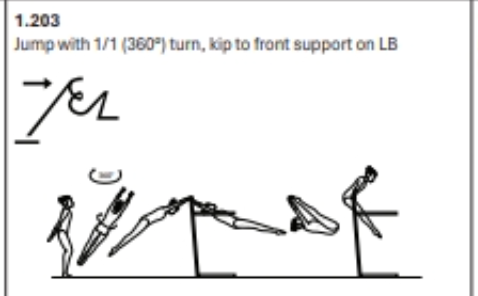
Then, you’ve got your jump full turn, then catch the bar and kip, which is hilarious to practice and kind of pointless outside of adding some pizazz — but why not??
And how about these for full-on kip replacements??
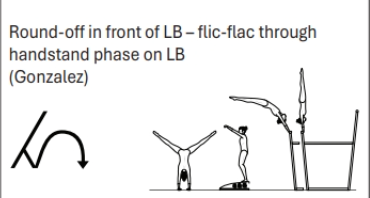
The Gonzalez: a roundoff onto a springboard, half a back flip and land on the low bar in a handstand. Terrifying. And so dope! It’s got D-value! And you could just toe-on shaposh outta that handstand to the high bar, like Nemour does. No kip necessary.
You thought kips were hard and took a ton of muscle? Try the OG McNamara (for some reason, the current code only names it that if you do a ½ turn out of it?). IMO, the bent arms in the video are kind of janky to me but good grief, this is difficult.
Finally, you could literally just jump to a handstand on the low bar. It’s in the code of points. Amy Chow did it, so why wouldn’t you? It’s valued as a B. If you do a full pirouette immediately afterward, it becomes a D. Complete kip erasure and we’re fine with it.
For more on 1952 and the history of gymnastics in general, you can’t go wrong with a deep dive on gymnastics-history.com! ↩
Bar joke. ↩
All college bar routines start from a 9.4, assuming they have the required number of skills at varying difficulty levels (labeled “A” - “E” depending on how hard they are). To get your routine to be worth a 10.0, you have to add .6 in “bonus points” — either by doing difficult skills or doing two skills in combination. The list of skills that gymnasts can choose from is, in theory, extensive! In practice, it’s pretty limited to the pool of common Level 10 skills. If you want to add bonus to your college routine with an E-value skill, you’re probably more likely to have trained a difficult dismount (like a double layout) than a Bhardwaj. We see a lot of double lay dismounts.
This is all wildly complex for the casual gym fan, but if you want to dig into it more, take a look at this chart from College Gym News. ↩
From The Balance Beam Situation:
The most important thing you need to know about NCAA deductions is ‾\_(ツ)_/‾. Keep that in mind at all times.
NCAA pretends that it follows the Level 10 code of points, except it obviously doesn’t. There is a tremendous amount of subjectivity remaining in NCAA scoring, including an unwritten understanding regarding which deductions from the Level 10 code actually count and which ones magically don’t for the purpose of scoring NCAA routines. The standard is, “We take the Level 10 code of points, and then just ignore all of it. The end. Here’s your score. Fetch.” ↩
I love to watch Skye Blakely swing bars, but she had four kips in her routine in the same competition and did not medal. ↩